

Starlink for Overland Vehicles: Complete Installation Guide (Mounting, Power, and Setup)
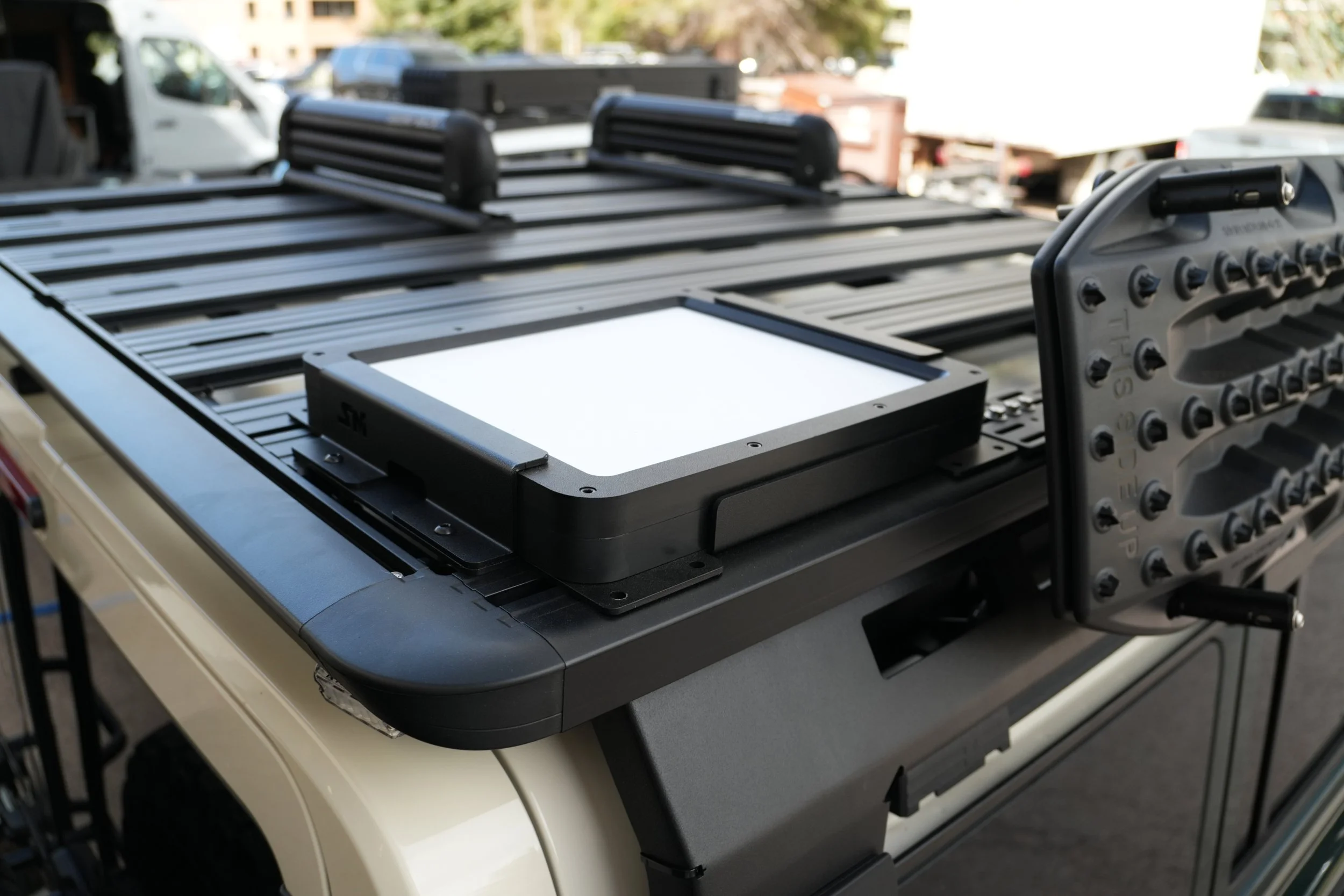
Reliable internet has become a core part of modern overland travel. Whether you are working remotely, navigating off-grid terrain, or staying connected with family on long expeditions, Starlink is the leading satellite internet solution for overland vehicles.
A successful Starlink installation in a truck, van, or SUV comes down to three critical systems: choosing the right hardware, mounting it correctly, and powering it properly. When these systems are integrated correctly, Starlink becomes a seamless part of your build instead of a loose accessory you manage on the road.
1. Which Starlink Unit Should You Use?
Choosing the right Starlink hardware depends on how you travel, how often you use internet in the field, and how your vehicle is built electrically.
Starlink Mini (Best for Most Overland Builds)
The Starlink Mini is quickly becoming the standard for overland vehicles because it is simple, efficient, and designed for mobile use.
It offers:
Compact, low-profile design
Lower power consumption
Built-in router
Simple USB-C power input
It is best suited for:
Overland trucks and SUVs
Vehicles with limited electrical systems
Users who want simplicity and reliability
For most builds, this is the preferred option.
If you are exploring a broader build, you can see how we approach full vehicle systems here.
Starlink Gen 3 (Best for High-Demand Users)
The Gen 3 system is built for higher performance and heavier usage scenarios.
It offers:
Higher performance ceiling
Better performance for multiple users and devices
More robust long-term operation
Tradeoffs include:
Higher power consumption
Larger physical footprint
More complex installation requirements
It is best suited for:
Full-time van builds
High-demand remote work setups
Vehicles with large auxiliary power systems
To see all of our upgrade capabilities, check out the page here.
2. Starlink Mounting for Overland Vehicles
A proper Starlink installation starts with mounting. In overland applications, the goal is simple: secure, low-profile, and always ready.
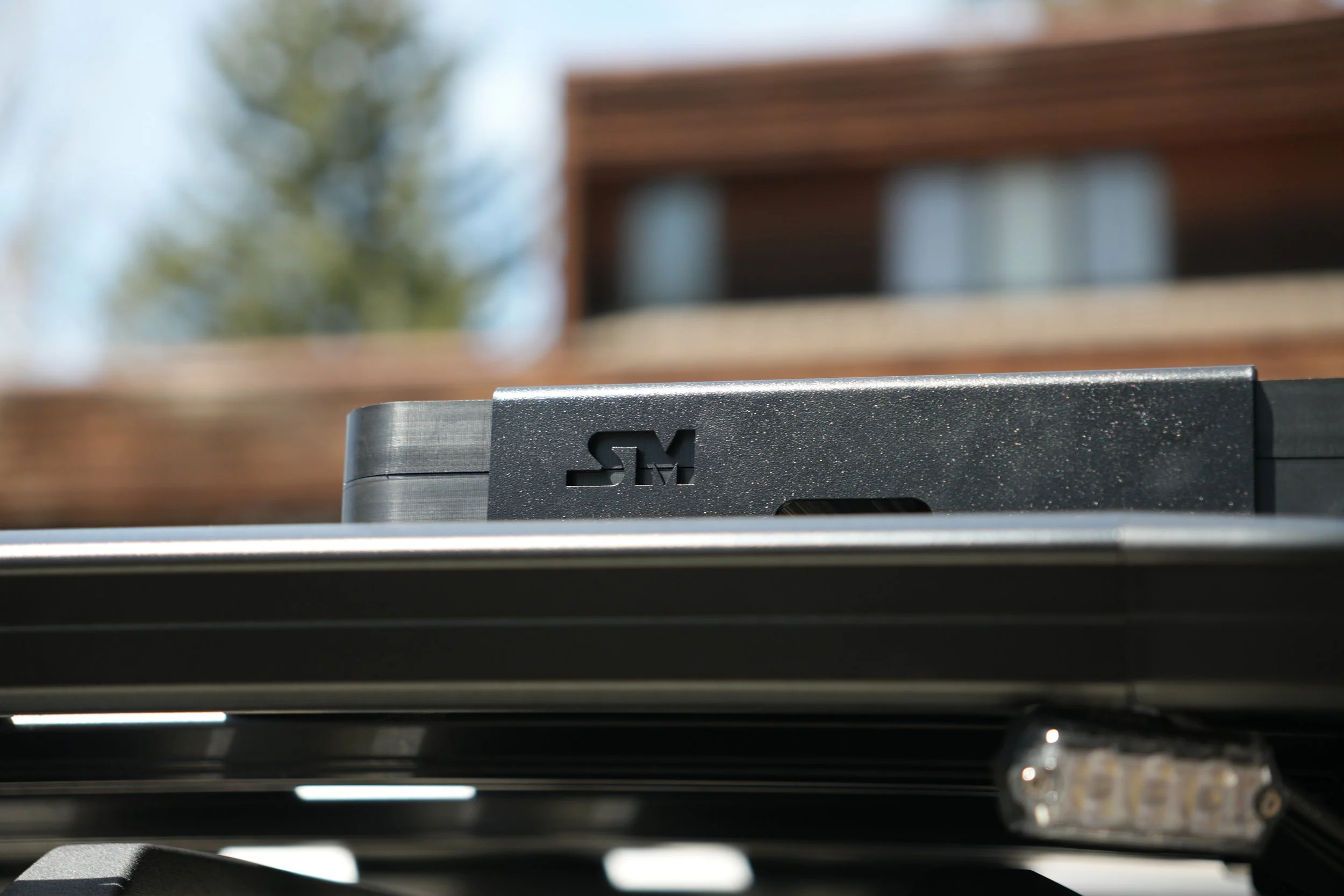
We typically recommend roof or roof rack mounting using proven systems such as StarMounts.
Why Roof Mounting Works Best
Roof mounting turns Starlink into a permanent part of your vehicle system instead of something you deploy each time you stop.
Key benefits include:
No setup or teardown at camp
Stable signal at highway speeds
Cleaner, purpose-built installation
Eliminates daily deployment friction
When mounted correctly, Starlink becomes part of the vehicle architecture instead of a loose accessory.
You can learn more about our Starlink integration here.
3. Powering Starlink in Your Overland Build
Power is where most Starlink installs fail in real-world use. It is also the most important factor in whether your system is reliable or frustrating.
Key Point: You Cannot Rely on Standard USB-C Vehicle Ports
Even with Starlink Mini, factory USB-C ports are not a dependable power source.
They are not suitable because:
They do not deliver consistent sustained wattage
They often shut off with ignition cycles
They are not designed for continuous high draw
Continuous Power Is Essential
Starlink requires uninterrupted power to maintain a stable connection.
If power is interrupted even briefly:
The system reboots
The connection drops
It must reacquire satellites before reconnecting
In practical terms, this means dropped calls, interrupted work sessions, and unreliable connectivity every time the vehicle is started, stopped, or cycled.
A proper system must provide continuous power at all times, whether the engine is running or not.
Option 1: Portable Power (Simple and Flexible)
A dedicated power station such as the Bluetti Elite 30 V2 is a strong plug and play solution.
It provides:
Stable, dedicated output
No vehicle wiring required
Easy portability between vehicles
This option is best for:
Weekend trips
Light or occasional Starlink use
Simple overland setups
Option 2: Switched Vehicle Power System (Best Long-Term Solution, More Complex)
For a fully integrated setup, Starlink should be powered through a switched, vehicle-managed auxiliary power system instead of a chassis battery or basic accessory outlet.
Modern platforms like the Ford F-150 with Pro Power Onboard and the INEOS Grenadier electrical system demonstrate how newer vehicles handle accessory power correctly. These systems are designed to support sustained loads through regulated, controlled outputs.
They provide:
Stable and regulated power delivery
Isolation from direct chassis battery draw
Support for continuous accessory use
Smarter power management across ignition states
Why This Matters for Starlink
Starlink is highly sensitive to power interruption. If power drops or fluctuates even briefly, the system will reboot, drop connection, and require time to reacquire satellites.
In real-world use, that results in downtime every time the vehicle is started or cycled.
A switched, vehicle integrated system eliminates that issue by maintaining stable voltage and controlled transitions between power states. It allows Starlink to function as a permanent part of the vehicle instead of an external accessory.
Key Distinction
This is not:
A chassis battery tap
A basic fused accessory line
A standard 12V or USB port
Instead, it is a purpose built auxiliary power system designed for sustained electrical loads such as communications gear, refrigeration, and lighting.
If you want this level of integration done professionally, you can start here.
Recommended Overland Starlink Setup
A properly designed Starlink system typically includes:
Roof mounted Starlink system using Star-Mounts or equivalent
Continuous power system using either portable or switched vehicle integration
Starlink Mini for most overland applications
This combination delivers:
Fast deployment or no deployment at all
Stable connectivity in remote environments
Efficient and reliable power management
Final Thoughts
Starlink is redefining what is possible in overland travel, but only when it is properly integrated into the vehicle system.
The difference between a frustrating setup and a reliable one comes down to execution. Proper mounting, continuous power, and selecting the right hardware determine whether the system just works or constantly needs attention.
When done correctly, Starlink disappears into the background and your connection simply works wherever you travel.
Ready to Build a Reliable Starlink Setup?
If you want a Starlink system that is properly designed for your vehicle and how you actually travel, we can help.
Schedule a Starlink install or consultation with us:https://www.whiteriveroverland.com/contact-us
