

Off-Grid Power Systems: A Guide for Your Van or Overland Vehicle
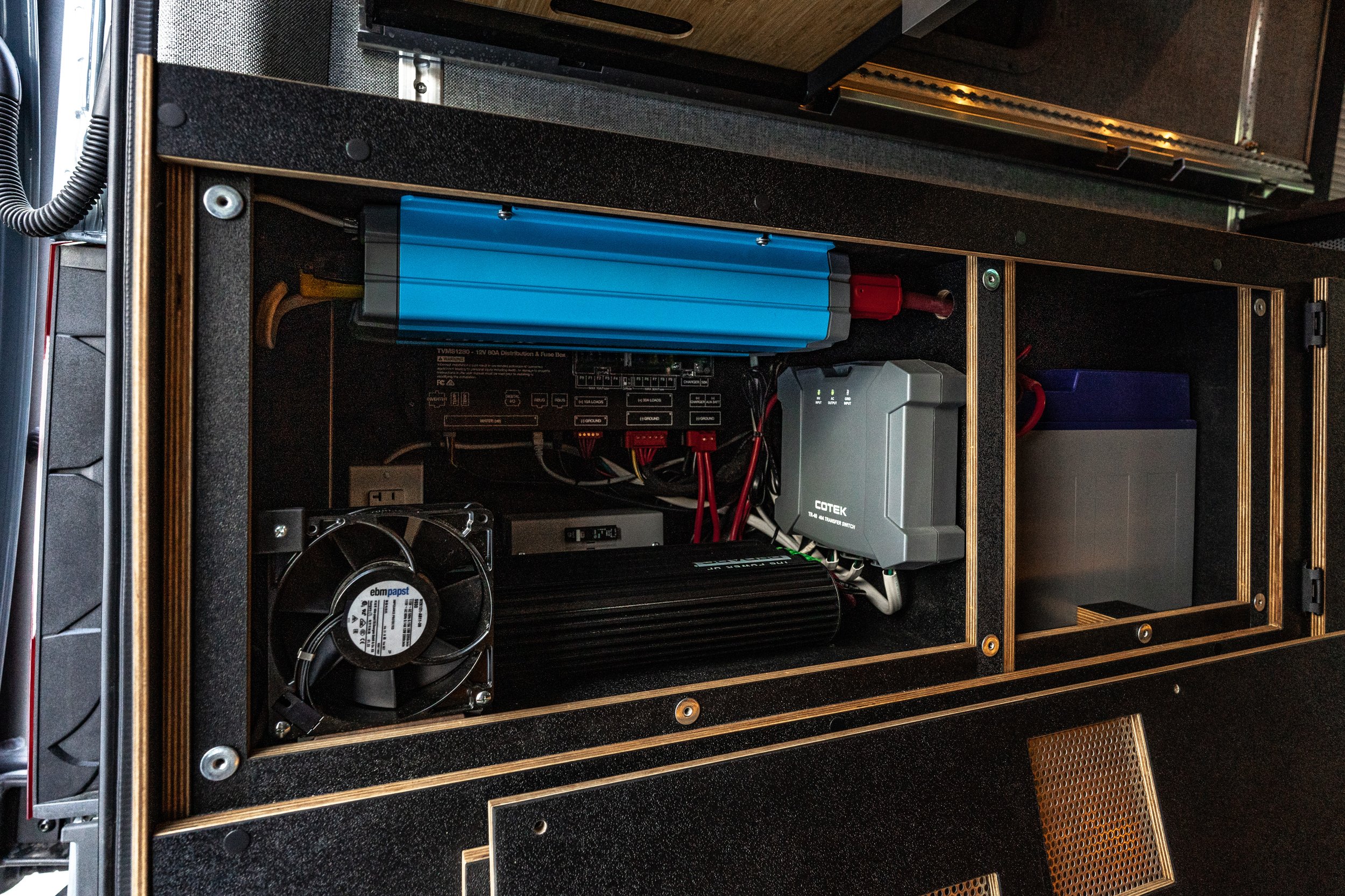
Whether you are building out a weekend warrior camper van, a dedicatedoverland rig, or just adding a reliable auxiliary power source to your SUV, understanding your electrical system is a critical first step.
At White River Overland, we often hear the same questions: What kind of battery do I need? Can I run a microwave? Is solar enough?
Building a robust, safe, and efficient power system isn't just about plugging things in and hoping for the best; it is about understanding the big three of off-grid electricity: Storage, Usage, and Recharging.
1. Storing Power: Battery Banks Explained
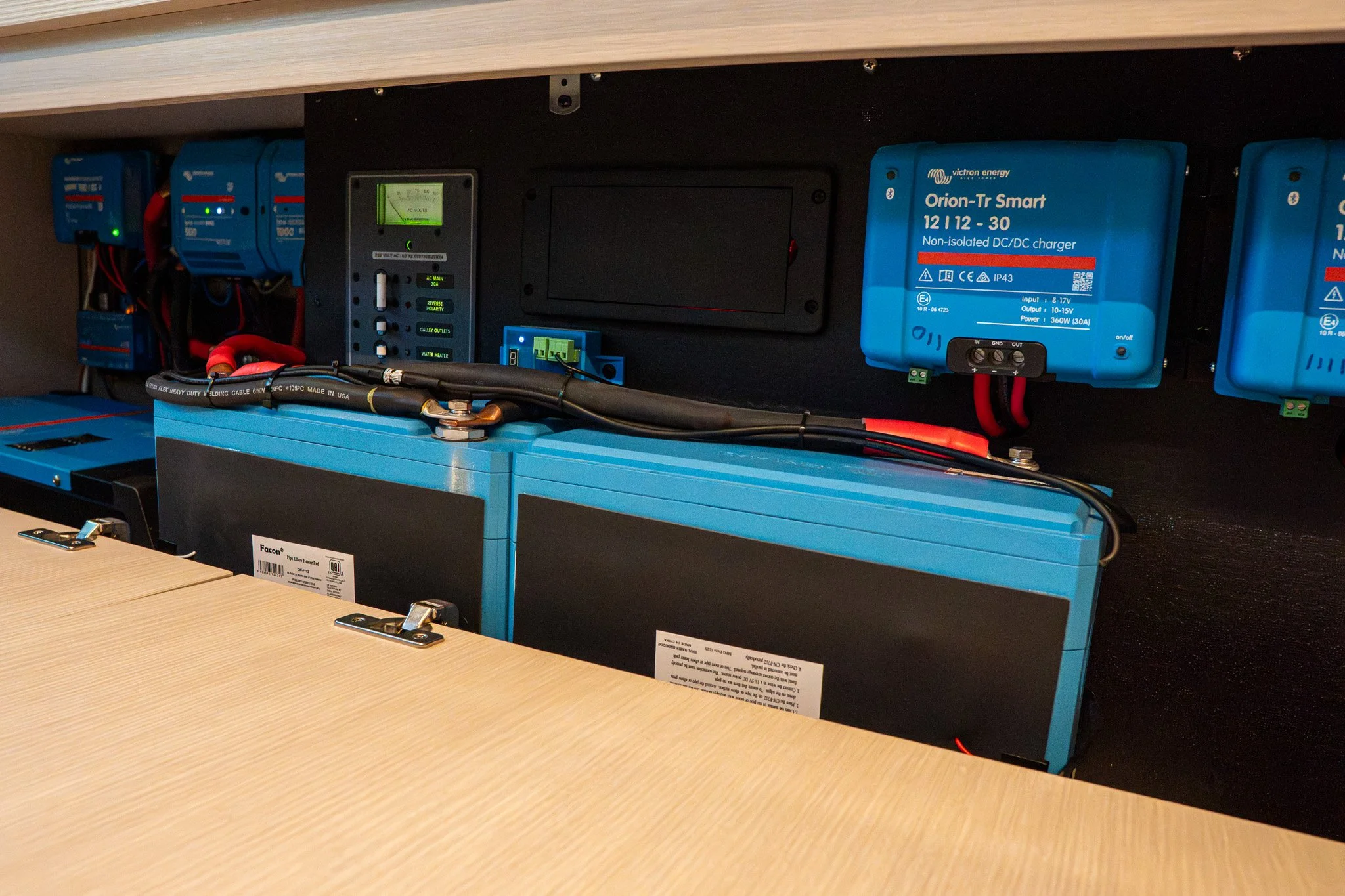
At the heart of your power system is the battery bank. While vehicle chassis batteries are designed for starting an engine, auxiliary batteries are built for deep cycling, which means storing and releasing power over long periods.
Lithium vs. AGM: Which is right for you?
Lithium (LiFePO4): The current industry gold standard.
Pros: Fast recharging, long cycle life, and lightweight.
Cons: Higher upfront cost. They also dislike extreme temperatures. In freezing climates, ensure your lithium batteries have built-in heating elements or utilize external heat mats to prevent damage during charging. You can explore high-quality options at our preferred partner Battle Born Batteries.
AGM (Absorbed Glass Mat):
Pros: Perform well in extreme temperatures and are more budget-friendly.
Cons: Significantly heavier and have a shorter lifespan if frequently discharged below 50%.
Capacity Note: Your needs dictate your power bank size. Minimalists running only LED lights and phone chargers may be fine with a standard 100Ah battery, while those looking to run induction cooktops or microwaves will need significantly more storage, regardless of whether you choose AGM or Lithium.
2. Using Power: 12V DC vs. 120V AC
Understanding the difference between DC (Direct Current) and AC (Alternating Current) is vital to preventing system failures.
DC Power (12V/24V): This is the current of your vehicle’s battery. It powers your lights, USB ports, and fridge directly.
AC Power (120V): This is what you use at home (the standard wall outlet).
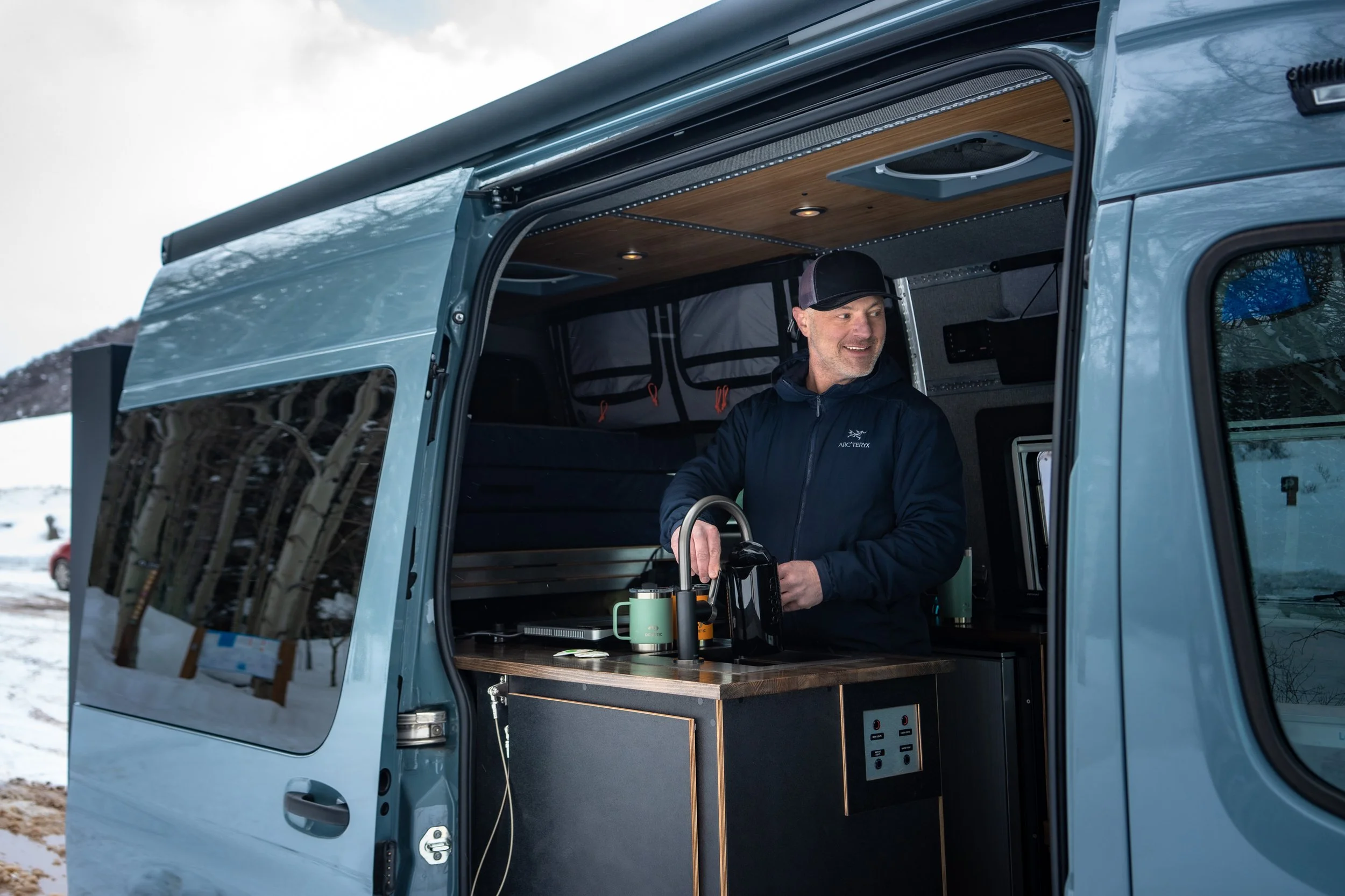
The Inverter: To run AC appliances like a blender or coffee maker, you need an inverter to convert your battery’s DC power into 120V AC.
Pro-Tip: Don't oversize your inverter. Even when idle, an inverter consumes battery power. Match your inverter’s wattage to the appliances you actually plan to use (e.g., a 2,000W inverter is standard for most single-burner induction cooktops).
3. Recharging Power: The Big Three
You cannot simply feed raw power from your alternator into your batteries; you need regulation to prevent a ‘fire hose’ effect that can destroy your equipment. There are three primary ways to keep your power system topped off:
Shore PowerIf you park at campgrounds or a garage, an inverter-charger allows you to plug into a standard wall outlet. This powers your AC appliances and simultaneously recharges your batteries, making it ideal for storage during the off-season and idle charging.
DC-to-DC ChargingThis is one of the most effective ways to stay powered up while on the move. A DC-to-DC charger monitors your vehicle's starter battery and, once it is full, safely diverts excess alternator power to your auxiliary bank. It ensures that when you arrive at your destination, you are ready to go.
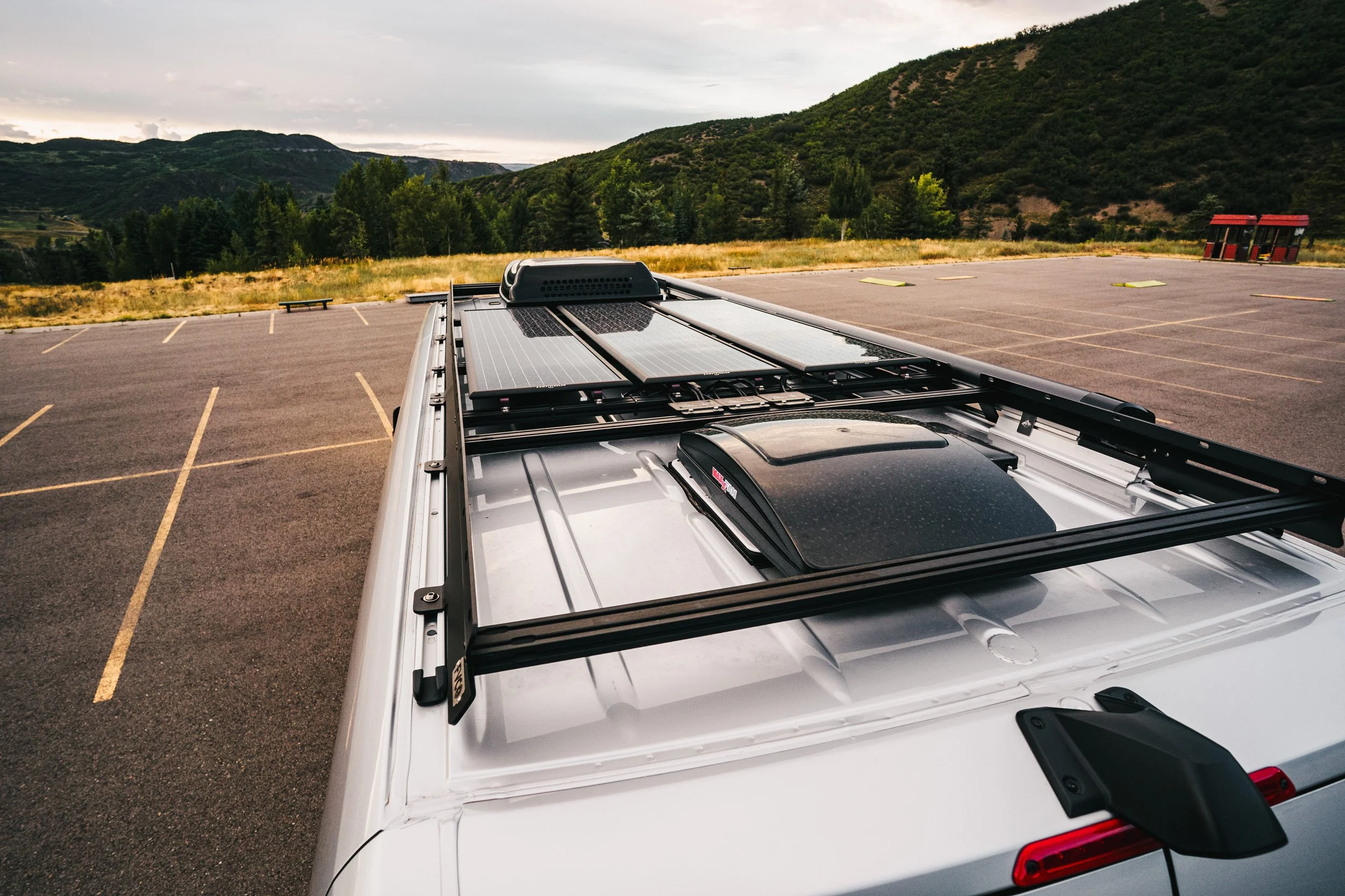
Solar EnergySolar is a great addition to any build, but it requires realistic expectations. While it is excellent for maintaining a battery bank throughout the day, it has limitations:
Inconsistency: Shade, storms, and darkness will halt charging.
Rate of Charge: It is a slow process. If you deplete your batteries overnight, solar may not fully recharge them by the next morning.
Equipment: Investing in reliable solar panels and solar kits is essential for a consistent energy supply.
Bottom Line: Solar is a great addition to a power system, but it should not be your only source of power if you want to avoid ending up in the dark.
Safety First
A poorly architected or installed electrical system is a significant fire hazard. Always ensure your system is properly fused, sized, and ventilated.
Need help designing the right system for your build?
At White River Overland, we specialize in power system upgrades. If you have questions about your specific setup or need a hand navigating your electrical architecture, reach out to our team today.
Check out our "Talking Shop" video here or the embedded link below for a more technical deep dive into off-grid power.
For inspiration on previous off-grid van builds, check out our build gallery here.
