

How to Spot a Quality Van Build: 8 Warning Signs to Check
At White River Overland, we see a lot of vans. Some come to us fresh off a build wanting upgrades. Others come to us for repairs after a stalled or poorly executed DIY or third-party build. Over the years, we've learned exactly where corners get cut, and what it costs owners down the road when they do.
A van conversion is a serious investment, whether you're buying a finished rig or commissioning a build. The problem is that a lot of van build quality issues don't show up until you've been living or camping in the van for a few months. By then, you're stuck with repairs, warranty claims, or a vehicle that never quite feels right.
The good news is that most red flags are visible if you know where to look. Here's what we tell our own clients to check, and what separates a quality van build from one that's going to cause headaches down the road.
Rattles and Loose Panels
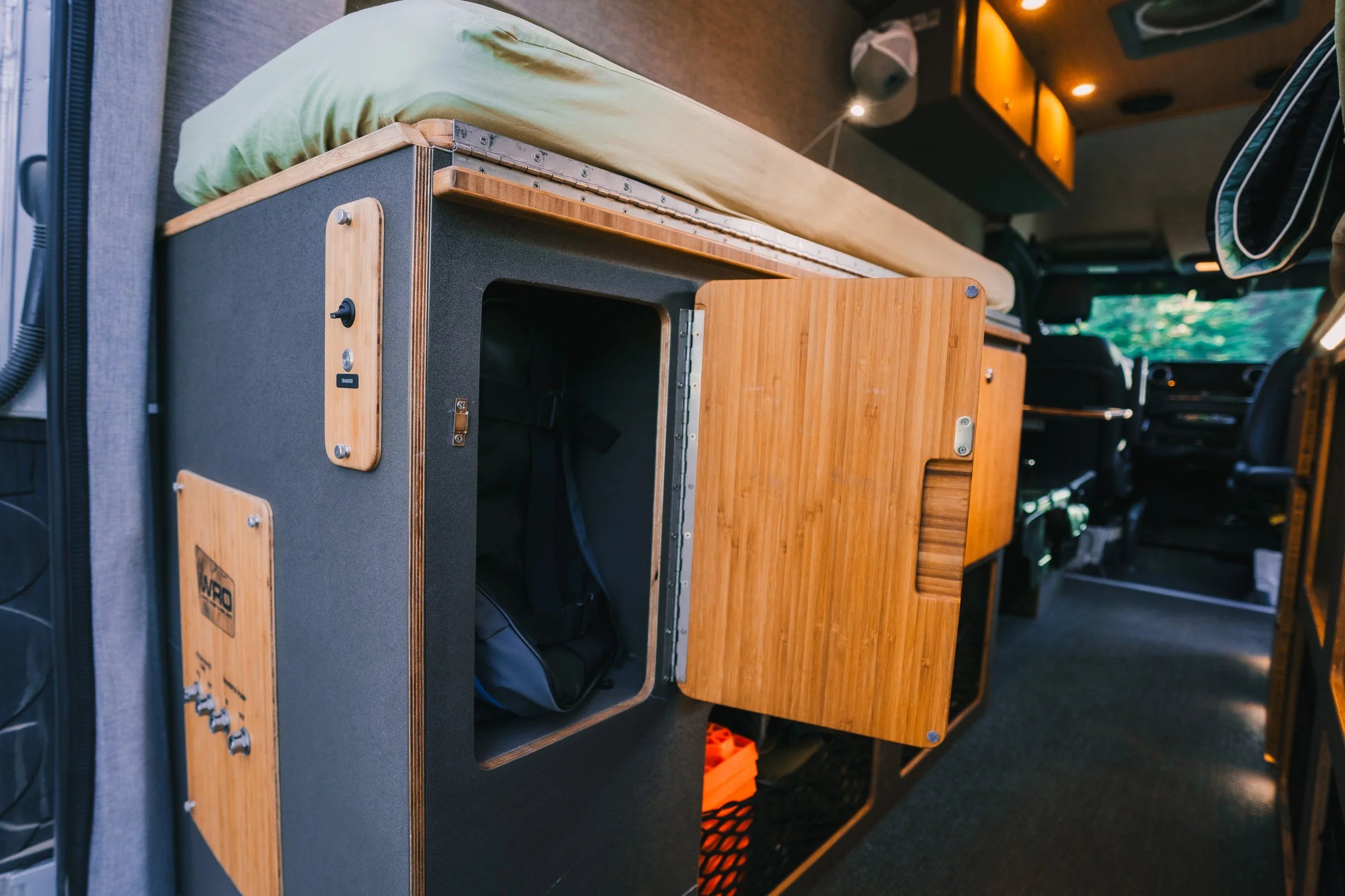
Take the van on a real test drive, not just a lap around the parking lot. Get it up to highway speed and listen. Rattles usually mean cabinetry, paneling, or fixtures weren't properly secured to the van's structure, or that builders relied on poor components that have worked loose over time. While all vans will make some noise, you want to pay attention to anything that sounds excessive.
A quality build accounts for the fact that a van flexes and vibrates constantly on the road. Cabinets should be bolted into the van's structure, not just screwed into thin interior paneling. If something's already rattling on a test drive, imagine what it'll sound like after a few thousand miles of washboard roads! It's the same principle we build around when we're doing van upgrades on a van that already has this problem, everything gets re-secured into the structure, not just re-fastened to whatever it was screwed into before.
Unfinished Edges and Water Intrusion Points
This is one of the most overlooked issues, and one of the most expensive to fix later. Any place where a builder cut into the van's metal, whether for a window, vent, solar panel, or wiring pass-through, is a potential entry point for water.
Look closely at:
Window and vent cutouts for consistent, clean sealant beads with no gaps or bubbling
Roof penetrations for proper flashing and butyl tape or approved sealant, not just a bead of caulk
Edges of cut metal for rust-preventive treatment (raw, exposed metal will rust from the inside out)
If you can see raw metal, uneven caulk lines, or sealant that looks like it was applied as an afterthought, that's a sign the builder rushed the exterior work. Water intrusion is often invisible until it's already caused subfloor rot, insulation damage, or electrical problems, so the exterior sealing work deserves close inspection before problems start.
Leaks and Water Damage
Beyond fresh sealant work, look for signs of past or ongoing leaks. Check the ceiling and upper cabinet interiors for water stains, discoloration, or a musty smell. Pull back edges of flooring if you can, and check the base of the walls where condensation or leaks tend to pool.
A quality builder will also think ahead about condensation, not just rain and snow. Proper insulation and ventilation matter as much as sealant does, especially for anyone planning to use the van through Colorado winters. If you're already noticing signs of water damage in a van you own, our campervan service and repair team can track down the source before it spreads any further.
Sloppy Electrical Work
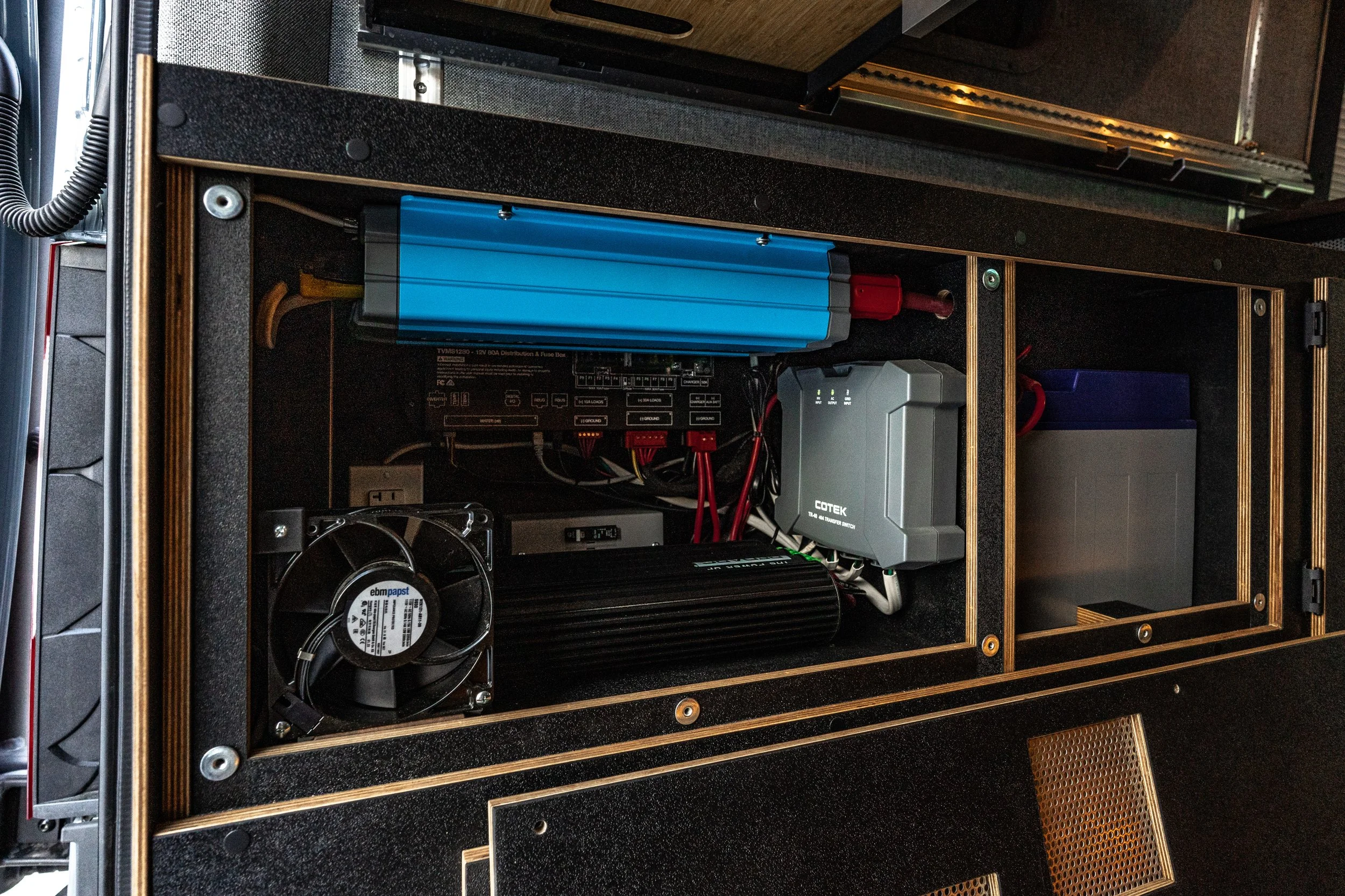
Electrical work is where corners get cut most often, and it's also where the stakes are highest. A poorly wired van isn't just inconvenient, it's a fire risk.
Warning signs include:
Wires running loose without sleeving or proper routing along the frame
Connections made with wire nuts or electrical tape instead of crimped, heat-shrink terminals
No fusing at the battery, or undersized fuses for the wire gauge
Wiring runs that cross sharp metal edges without grommets or protection
A well-executed electrical system is neat, labeled, and accessible for future troubleshooting. If you can't tell where a wire goes or the wiring looks improvised, that's worth being very cautious about.
Check out our video here for more info about correct wiring in a van.
Rust
Rust tells you a lot about how a van was handled during the build process and how it'll hold up over time.
Check around:
Any cut edges from window, vent, or wiring penetrations
The undercarriage and wheel wells, especially on used vans
Screw and bolt holes where the protective coating may have been compromised
A little surface rust on an older used van isn't necessarily a dealbreaker, but rust originating from cuts made during the build process is. It means the builder didn't treat exposed metal after cutting into the shell, and it will spread.
Cabinetry and Joinery
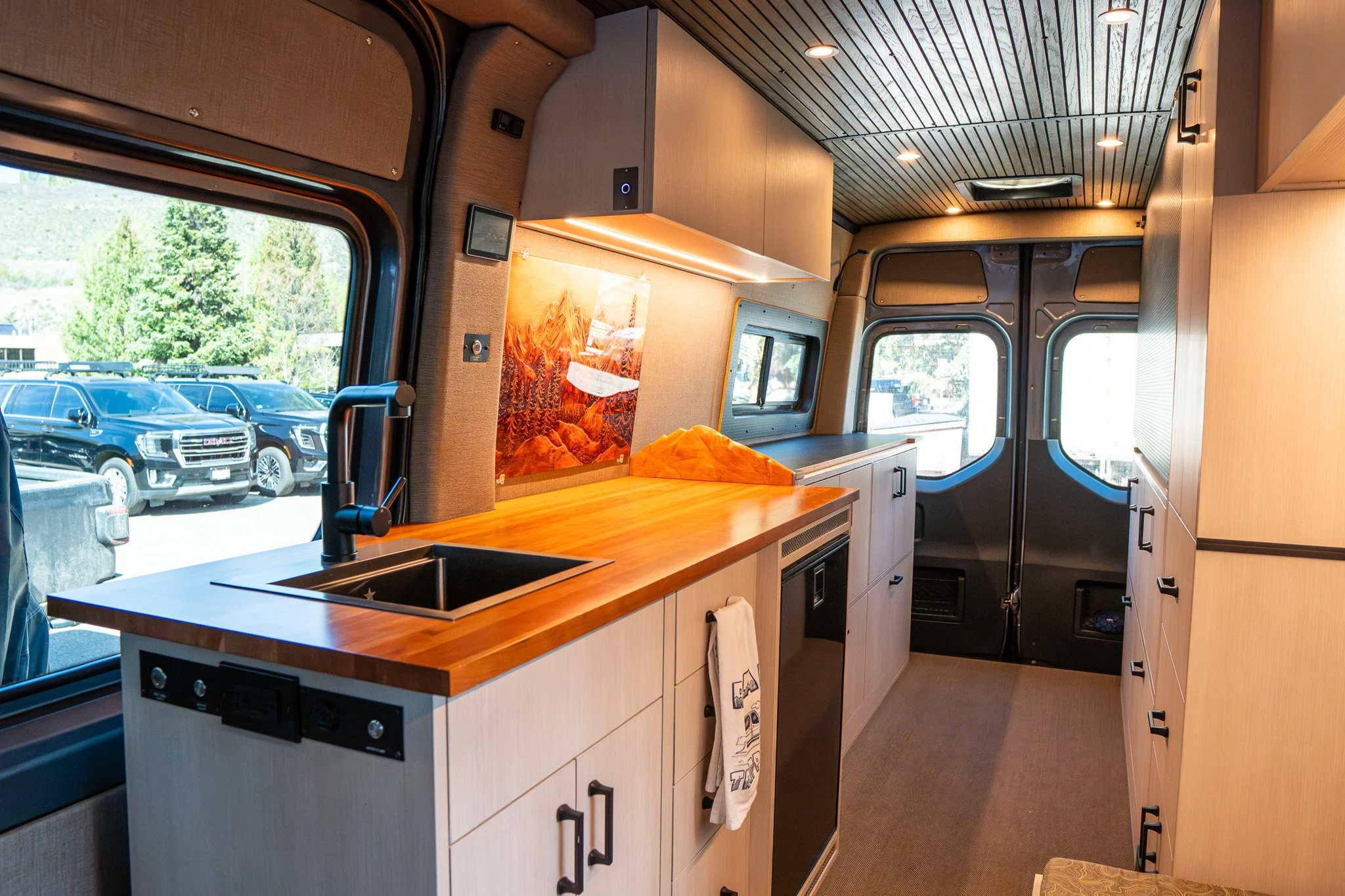
Cabinetry is one of the easiest places to judge a builder's overall standards. Drawers and doors should open and close smoothly with no binding, no visible gaps, and no play when you push against them. Run your hand along the corners and joints. They should be finished cleanly, not just painted or covered over to hide rough cuts.
Pay attention to how cabinetry holds up under load too. Ask what's inside a cabinet face before you judge it by the outside, plywood thickness, edge banding, and hardware quality all affect how a piece ages once it's loaded with gear and bouncing down a forest service road. Sloppy joinery is rarely an isolated issue. It's usually a sign that the same lack of attention is carried through to parts of the build you can't see, like the framing and fastening underneath. You can see the level of finish work we hold ourselves to in our van build gallery.

Component and Brand Quality
Ask what brands were used for the electrical, water, insulation, and heating systems.. Components should come from reputable manufacturers, ideally ones that back their products with a warranty rather than off-brand or unlisted parts sourced to cut costs.
A builder who's proud of their component choices will tell you without hesitation, usually before you even ask. We're upfront with every client about the brands we build with and why we chose them, because the components matter just as much as how the van looks when it's finished. If you're weighing a full build against upgrading specific systems on a van you already own, our van upgrades page walks through the component options we install and the industry-leading brands we partner with.
Warranty and Build Documentation
A quality build comes with a clear warranty and documentation of what was installed and how, down to the specific components and systems. If a builder can't produce that, or hesitates when you ask for it, it's a sign the build wasn't approached with the same rigor throughout.
Documentation matters just as much after the sale as before it. If something needs service down the road, whoever works on the van should be able to see exactly what's in it without guessing. Every build we complete comes with documentation and a one year warranty, so owners and future service techs alike know exactly what they're working with.
The Bottom Line
Most of what separates a quality van build from a bad one comes down to the details you can't see once the interior panels go up. That's exactly why it pays to look closely before the sale, not after. A quality builder won't mind you asking questions or taking a close look. If anything, they'll want you to.
Every issue covered above is something we mitigate against from day one at White River Overland. Our team secures cabinetry into structural framing rather than relying on adhesive, properly seals and treats every cutout before anything gets installed over it, and routes and fuses all wiring in a safe and professional manner. We source components from reputable, warrantied brands, and we stand behind every build with our one year warranty.
If you're evaluating a van build, whether it's one of ours or someone else's, we're always happy to walk through what to look for in person. Take a look through our semi-custom van conversions to see our approach firsthand, or reach out anytime for an estimate or a second opinion on a rig you're considering. If you're looking for a build you can trust, let's get started today.
